
Business Finance in Estonia 2026: The Complete Founder & CFO Guide

Estonia offers a range of business finance options across asset classes and financial instruments. Choosing the right structure and provider is a strategic decision that impacts management time, cost of capital, growth trajectory, and legal claims on company assets.
In recent years, shifted investor risk appetites, higher risk premiums and interest rates, and longer private equity holding periods have reshaped the landscape. Debt and private equity in Estonia are accessible, but securing the right deal requires greater precision and strategy.
Here is what Founders and CFOs must know about navigating business finance in Estonia in 2026.
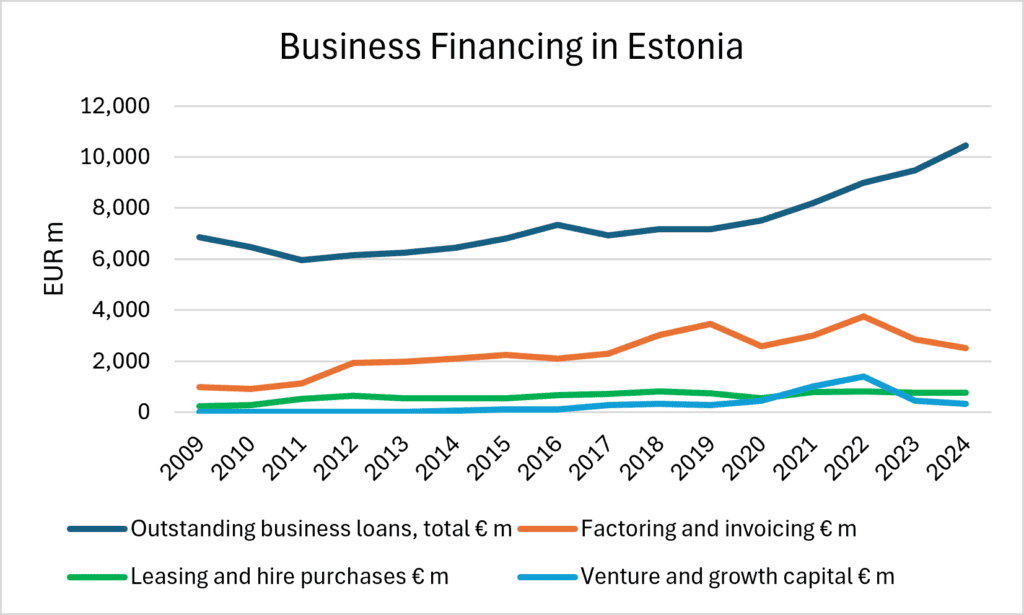
Source: OECD
Strategic Fundraising & Capital Structure
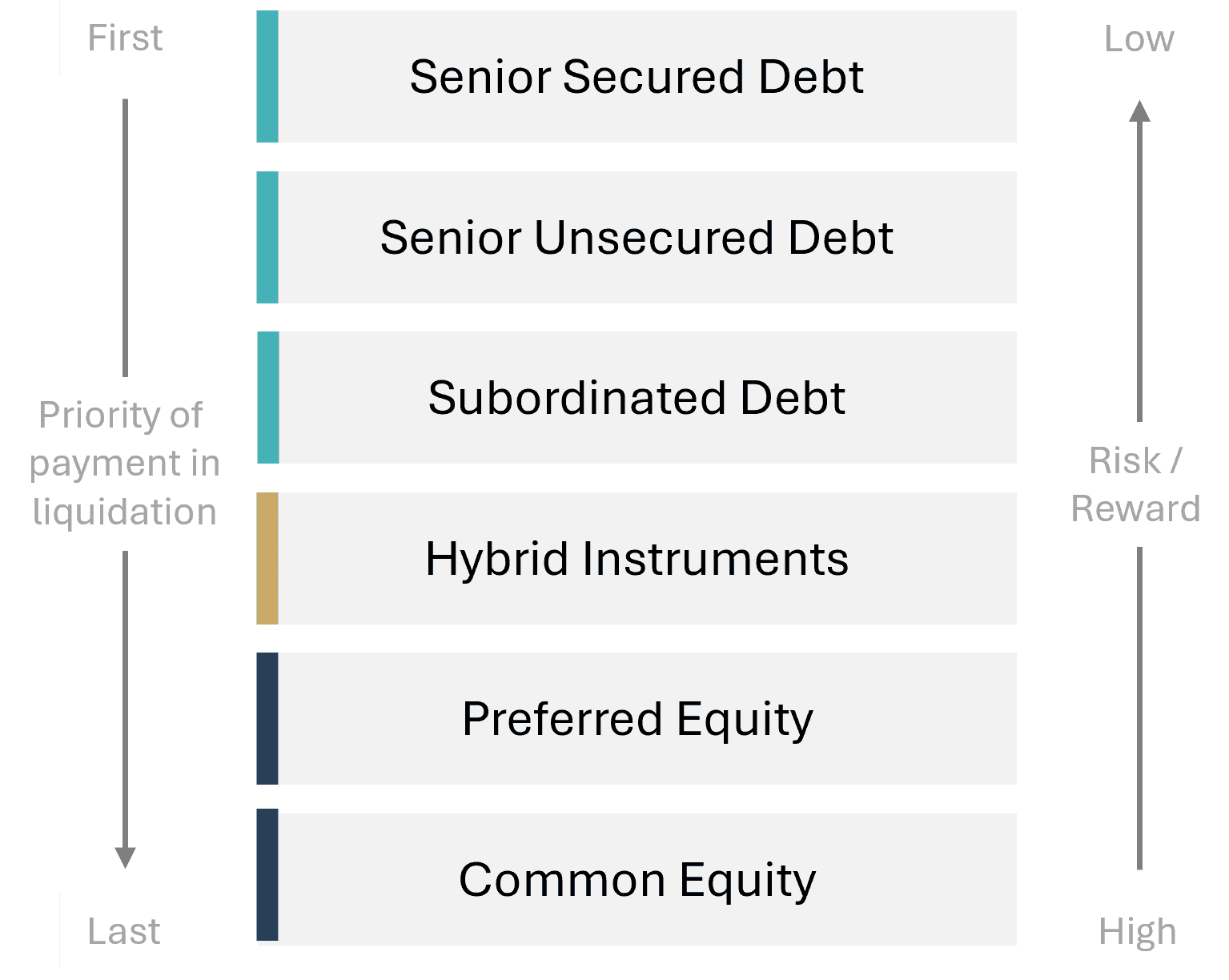
A key mistake is failing to align with investor risk profiles and return expectations. A company’s capital structure dictates where an investor ranks during liquidation and how upside is shared:
- Equity: highest risk but captures valuation upside.
- Hybrid: Combines debt and equity characteristics e.g. convertibles, venture debt, mezzanine, and SAFE notes.
- Debt: Capped, lower returns in exchange for priority on cash flows and assets.
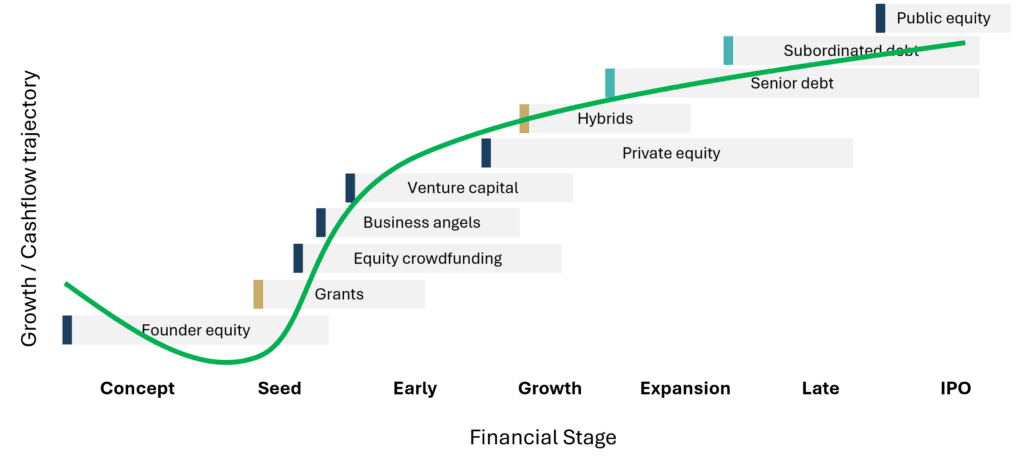
Companies blend a range of instruments as they journey through their financial life. As companies become larger and more sophisticated they have greater choice, with cost of capital, terms and investor fit always important. Estonia supports most major instruments but can be weak on hybrids and large deal sizes.
Accelerators in Estonia
Overview: Accelerators provide capital, mentorship, and commercial network access to develop and scale innovative ideas. Funding spans seed equity, grants, and challenge-based prizes.
Key Providers: Active accelerators in Estonia include tech-focused platforms like Startup Wiseguys and Tehnopol, as well as defence-focused programs like NATO DIANA.
Key Terms:
• Capital amounts are modest and time bound.
• Cohort or sector focused structure.
• Participation may involve program fee or giving a minor equity stake.
• Innovation challenges may require intellectual property (IP) transfer.
Grant Funding in Estonia
Overview: Grants provide non-dilutive capital, allowing business to expand without giving up ownership. A range of Grant options exist in Estonia based on life stage (R&D, startup, or growth); industry (deep tech, defence, green, etc); or creating jobs.
Key Providers: Estonian and EU grants are primarily managed by the Estonian Business and Innovation Agency (EIS).
Key Terms:
• Capital is completely non-dilutive.
• Businesses must co-finance a % of the requirement.
• Strict use-of-proceeds, performance targets, and reporting.
• Non-compliance or failure to meet targets can trigger repayment provisions.
Venture Capital in Estonia
Overview: Venture Capital (VC) is a form of private equity finance for early-stage and high-growth businesses with proof of concept, working prototypes, or commercial traction. Given high failure rates (up to 90%), VC funds require high returns and take an active governance role.
Key Providers:
Angel Networks: c.50 high-net-worth individuals providing seed capital, network, and advice.
VC Funds & Family Offices: c.15 funds including Tera Ventures, Change Ventures, and Plural provide venture capital in Estonia.
Crowdfunding: Platforms such as Funderbeam have retrenched in recent years.
Government: SmartCap makes direct investments, allocates capital to domestic funds, and participates in Baltic Innovation Fund initiatives.
Key Terms:
- Results in equity dilution.
- Strict use-of-proceeds, performance targets, and reporting.
- Hands-on investor participation and governance.
- Check capacity and reserves for follow-on funding rounds.
Private Equity in Estonia
Overview: Private Equity (PE) focuses on funding expansion-stage growth and buyouts. PE investors have lower risk profiles than VC and look for clear trajectories toward an exit.
Key Providers: c.5 local firms provide private equity in Estonia, investing €75 million across 102 transactions in 2025. Major global PE funds and institutional investors target Estonia unicorns.
Key Terms:
- Results in equity dilution.
- Requires a clear growth trajectory and pathway to exit.
- Active management approach, often involving operational restructuring, leadership changes, or corporate carve-outs.
- Strict performance reporting and benchmarking.
Estonian startups have raised over €5.3 billion in venture capital and private equity over the past 20 years. Roughly 90% of total funding raised by Estonian tech companies has originated from international investors.
Hybrid Funding in Estonia
Overview: Hybirds combine debt and equity characteristics e.g. convertibles, venture debt, mezzanine, and SAFE notes. They offer additional financing options for businesses between traditional growth stages, provide investors higher yields, but add complexity to the capital structure.
Key Providers: Hybrid capital providers remain scarce in Estonia.
Key Terms:
- Highly structured from a cashflow and legal perspective.
- Requires careful analysis of cost and impact on existing investors.
- Explicit conversion triggers, valuation caps, or maturity covenants.
- Rigorous performance and reporting obligations.
Debt Funding in Estonia
Overview: Debt provides capital for a defined term, with explicit interest rates and repayment schedules. It is low cost relative to equity, with senior debt maintaining highest priority over cash flows and assets in liquidation.
Available Instruments:
- Working Capital: Overdrafts, revolving credits.
- Term Loans: Medium and long-term loans (bilateral or syndicated).
- Asset-Backed: Invoice finance, factoring, leasing, real estate mortgages.
- Structured Finance: Project and trade finance facilities.
- Capital Markets: Private placements, listed corporate bonds.
Key Providers:
Banks: Primary lenders include SEB, Swedbank, Luminor, LHV, Coop, Holm, and BigBank.
Specialist Lenders: Non-bank alternatives include Inbank, Hüpoteeklaen, and Investly.
Crowdfunding: Higher-coupon debt options via Bondora, Credory, and EstateGuru.
Multilaterals: Large infrastructure and project financing via EBRD and Nordic Investment Bank.
Key Terms:
- Low cost of capital relative to equity and hybrids.
- Senior claim on cash flows and assets.
- Range of structures and repayment options.
- Subject to encumbrance limits and financial covenants.
FAQ about Business Finance in Estonia
Is there startup funding in Estonia?
Yes, over the past 2 decades Estonia has built a range of options by asset class and financial. Estonian startups and scaleups have raised EUR 5.3bn in private equity alone over this period, from local (10%) and international (90%) investors.
What is the most common source of funding for startups in Estonia?
Concept and Seed stages tend to be self-funded, with Grants and Venture Capital popular for early-stage companies with traction.
Can e-Residents apply for business finance in Estonia?
Yes, Estonian entities are entitled to apply for accelerators, grants, and other forms of finance in Estonia. Investor decisions are complex, including factors such as financial performance. team, requirement, and structure proposed.
Does Estonia have a loan guarantee scheme?
Yes, the Estonian Business and Innovation Agency (EIS) provide guarantees to companies with limited collateral or credit history. This helps companies access bank loans, leases, and guarantees at affordable rates.
Does business finance impact 0% tax in Estonia?
0% corporate income tax in Estonia applies when profits are retained or reinvested. CIT becomes payable when dividends or capital gains are distributed. Equity investors favour dividends as they increase returns, while Debt investors are sensitive to weakening the balance sheet.
How TrustBooks helps Business Finance in Estonia
TrustBooks provides accountancy, taxation, and financial advisory services in Estonia. Our team has extensive experience in global banking and capital markets, including financial strategy, fundraising, and investor relations.
Book a free consultation today to discuss Business Finance in Estonia.

