
Running an Estonian Company (OÜ): 5 Essential Pillars in 2026

A growing number of businesses and investors incorporate an Estonian company, known as an Osaühing (OÜ). The reasons are compelling: frictionless access to the EU markets, digital entity administration, and a competitive corporate tax system. Learning to manage an Estonian OÜ requires clear understanding of legal and fiscal obligations. Whether you are looking to incorporate in Estonia, or already operating, here are 5 pillars every director must master:
1. Estonian Accounting Obligations
Staying compliant protects you from penalties and keeps your company in good standing.
VAT Registration and Reporting: If your taxable turnover in Estonia exceeds €40,000 annually, VAT registration is mandatory. Once registered, you must apply 24% VAT and submit a VAT report monthly, even if no transactions occurred in the period.
Payroll Tax Reporting (TSD): If your Estonian OÜ employs local staff or distributes dividends, you are required to submit an Income and Social Tax reports (TSD declaration) with the Estonian Tax and Customs Board (EMTA).
Annual Reports: Every Estonian company – including dormant – must file an annual report within six months of their financial year end. Large or complex entities may also require a statutory audit. Failing to file on time can result in penalties or your company being struck off.
2. Understanding Estonia’s Unique Corporate Tax System
Estonia’s tax system is unique in Europe and competitive globally, but frequently misunderstood.
0% Corporate Income Tax on Retained Profits: Estonian companies pay zero corporate income tax on profits that are retained or reinvested. Tax becomes payable when dividends or capital gains are distributed, at 28% (22/78). This makes Estonia attractive for companies that reinvest for growth.
Cross-Border Taxation Considerations: Estonia has an extensive network of Double Taxation Avoidance Agreements (DTAAs). Understanding the treaty between Estonia and your home country is essential to ensure your Estonian company is not taxed twice on the same income.
Personal Tax Status: e-Residency does not confer tax residence of Estonia. However, drawing a salary from your Estonian OÜ may create a tax liability. Understand the nuances and seek professional advice.
Estonian company birth rate grows rapidly….
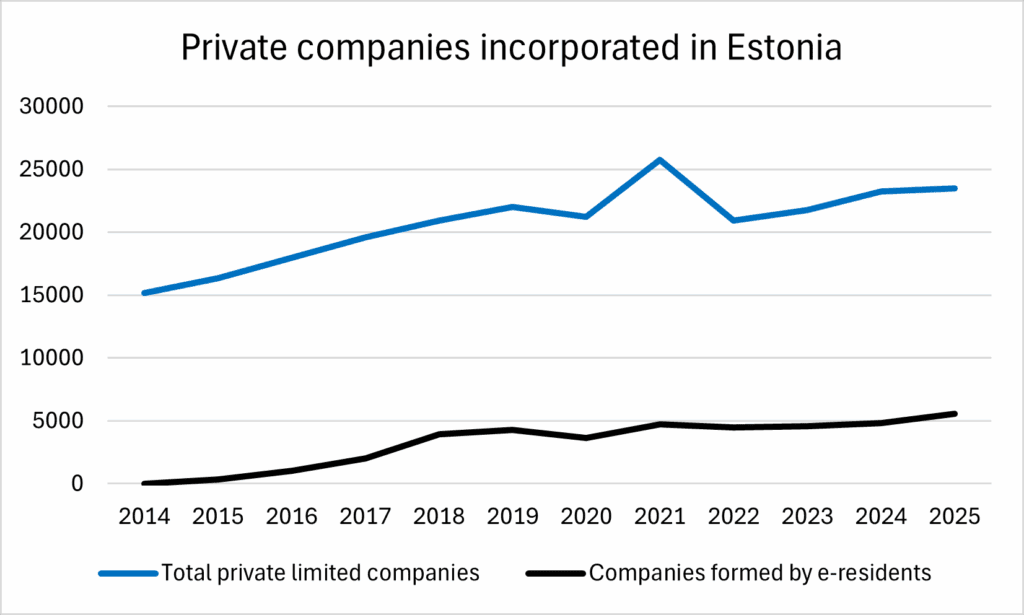
Source: Business Register, e-Residency
3. Banking for an Estonian Company
Opening a bank account is a legal requirement after you incorporate an Estonian OÜ. Businesses have a choice between traditional banks and FinTechs:
| Provider | Examples | Best for | Onboarding |
| Traditional Banks | LHV, Swedbank, SEB, Coop | Corporates and investors | Usually requires an in-person visit. |
| Global Fintechs | Wise Business and Revolut Business | e-Residents and freelancers | Online with Know Your Customer and Know Your Business verification. |
Providers have differing risk appetite, fees, onboarding and service processes, consult TrustBooks or start your search early.
4. Corporate Law: What Every Estonian OÜ Director Must Know
Estonian OÜ are governed by the Estonian Commercial Code, which draws on Roman-Germanic legal principles. It is a well-established framework, but there are important obligations every director should understand.
Corporate Law: The Code sets out the rules for company formation, management, shareholder rights, and dissolution. Familiarising yourself with its key provisions is part of your duty as a director.
Indirect Laws: Beyond the Code, an Estonian company is subject to additional legislation covering employment, commercial contracts, and investment activities.
Personal Liability of the Director: As the director (juhatuse liige) of an Estonian OÜ, you can be held personally liable for certain breaches of duty, negligent management, or failure to meet statutory obligations. This is not unique to Estonia, but reinforces the importance of staying compliant.
5. Navigating Estonia’s Digital-First Business Culture
Estonia is one the world’s most advanced digital societies. Operating here means adapting to a culture and infrastructure built around efficiency, transparency, and trust.
Digital by Default: Almost all interactions with Estonian government bodies happen online via the e-Business Register and EMTA portals. Digital identity and signatures are legally binding. Estonians expect this as the norm, not the exception.
Direct Communication: Estonian business culture values precision and brevity. Meetings and emails tend to be concise and purposeful, come prepared and avoid over-selling.
Reputation Matters: Estonia is a small country, and most Estonian company data is publicly accessible via the e-Business Register. Conduct your business professionally: your reputation is visible.
How TrustBooks Helps Your Estonian Company
TrustBooks provides expert accounting, taxation, and advisory services to clients operating an Estonian OÜ. Our team has extensive experience helping businesses and investors to capture opportunities and meet their obligations.
Don’t let compliance hold back your global growth, book a free consultation today to discuss your Estonian company.

